Author Archives: Noelmcoughlan

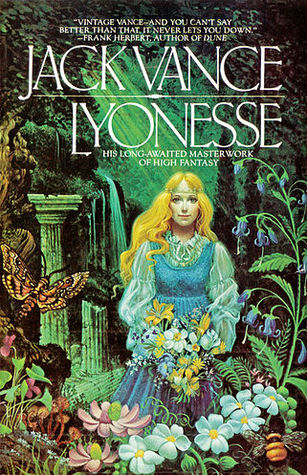
Madouc By Jack Vance

Madouc


In many ways, the Lyonesse Trilogy consists of three threads which connect sometimes very tangentially. There is the competition between the various kingdoms, the conflict between the mages, and the quests into ‘fairyland’. Each of these stories is dispersed through the novels in varying doses.

In the final volume, it felt at times like Vance had left himself with too much to do. Every now and then, he hit the fast forward button and events whiz by almost in summary. At other times, tangential and inconsequential matters were lingered over. A great deal of writing was spent establishing characters only to rid them from the book in a sentence.

Maduoc eclipses to a greater or lesser extent the main characters from the previous novels. I felt Glyneth in particular got short shrift. Where, for instance, were these swords she brought back from Tanjecterly? The concentration on Maduoc compresses the ultimate conclusion of the struggle between Aillas and Casimir, making it feel a little rushed.

And yet, the novel makes up for these dashed expectations. Shimrod’s adventures in the previous novels, at times made disjointed and abrupt by the opaque central mystery now click into place. More importantly, Maduoc is an engaging character and her adventures kept my interest throughout. I was particularly moved by the ultimate fate of one of the minor characters. It was very well done.

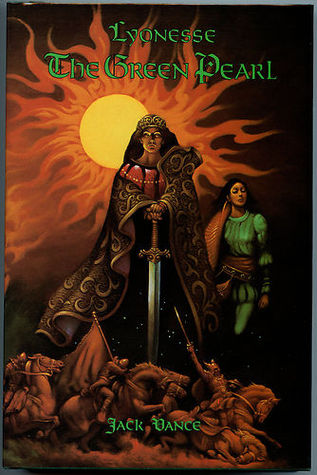
The Green Pearl By Jack Vance

greenpearl


Though this book is called The Green Pearl, the pearl itself bookends the story, the vast bulk of which is devoted to Aillas’s efforts to defeat the Ska and Casimir’s political machinations. Aillas proves to be every bit as crafty as his enemies though his subjects appear remarkably calm when their king disappears without warning. Shimrod also pops up here and there to fathom the mysterious Melancthe.

The book is filled with adventure, colourful characters, and clever scenes. Dhrun fades into the background, taking a backseat to Aillas and Glyneth. The trip to the delightfully named Tanjecterly was particularly entertaining if nearly a separate story.

The fact that it’s a sequel works very much to its favor in that we’re clear from the start which characters we’re supposed to root for. The only fly in the ointment was Father Umphred. His interminable campaign to build a cathedral really got on my nerves. I suppose he isn’t meant to be a sympathetic character, but I could have done with less of him. All in all, it is a very satisfying read and a worthy successor to Suldrun’s Garden.


September Update

KONICA MINOLTA DIGITAL CAMERA

I really must write these updates more often.

When I wrote the last one in June, I was working on the first part of a LitRPG trilogy, codenamed Spaghetti 1, 2, & 3. I now have first drafts of the first two completed and am currently half-way through the third.

The first book is kind of typical for LitRPG with some twists. The main character, starting off at the lowest skill level, must defeat a local (player) boss to win his freedom. The world is kind of like a typical fantasy MMORPG (for me). The focus is on the player interactions. The length of the first draft is about 49k words. It needs a lot of work, but hopefully, there’s enough in there to keep the reader interested.

Spaghetti 2 is a much different beast. It has a much more epic scope and the typical tropes kind of fall away a bit. Wait till you see the setting! Dante’s Inferno was a big influence on the story but I really let my imagination run riot. The action takes place in a locale we briefly visit in the first book. The main character is more advanced in this one but so are his surroundings. He’s up against much more powerful players with godlike powers. The first draft came in at 40k but it is absolutely packed with action. I don’t see any problem expanding it into full novel length.

Spaghetti 3 is an apocalyptic story. The end is nigh for the game world. At this stage, the main character is very advanced, the head of a powerful clan. A lot of seeds sown in the first and second books will reach fruition. This book will take a lot of work because given Book 2 is so epic, I have work out how to dial the third up to eleven.

I decided to write the three books to first draft so that I can see how all the various elements fit together. Although the three books have very different plots, I want to give them a cohesive tone.

Once the first draft of the third book is complete, I’ll be splitting my time between redrafting the books and writing new stuff. At times having so many ideas for projects is frustrating. If only I could get them all written and released. But I never publish anything without it being as good as I can make it.

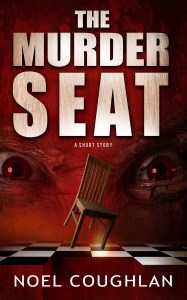
On the short story front, I made The Fate Healer wide and free. I am in the process of doing the same with a new horror short story called The Murder Seat. I wrote it originally about three years ago. It’s set in recessionary Dublin in the 1980s. Hopefully, people will enjoy reading it as much as I enjoyed writing it. 🙂


And The Winner Is…

seat


The winning cover was designed by Venanzio. It is awesome, but I must say it won against some stiff opposition. The facility to carry out polls is a really great feature on 99designs, because it allows you to test immediate reactions of people unfamiliar with the covers.

My intention is to make this story free out like The Fate Healer, so publication will be a little drawn out. I hope it will be free on all the usual stores by mid next week. Here’s the blurb to wet your appetite.

Dr. Herbert Marriott has a problem that only murder can solve. Luckily for him, the perfect weapon is locked away in his rundown museum, one too incredible for any court to accept. The cursed chair kills all who rest upon it. But will Herbert’s victim be so easily drawn to her fate?


Help me judge a book by its cover: The Murder Seat

A new short story is on its way. This one is a horror story. However, first I need to pick a cover. Follow the link below and vote based on your initial impression of which is most likely to make you buy.

https://99designs.ie/contests/poll/xy0mk9?urlcategory=illustrations

UPDATE:  The poll is now closed and the winner will be revealed shortly!  Thanks to everyone who participated.


Suldrun’s Garden By Jack Vance

Garden


This book is the first of trilogy set in that magical time of medieval anachronistic romance when knights charged about in the Dark Ages in a manner more befitting several centuries later. Vance has plonked several legendary realms (for example Ys, Avalon, and Lyonesse) on an archipelago in the Atlantic, the Elder Isles, which sinks without trace (or record) centuries later.

The book has a low key start  in the palace of Casimir the King of Lyonesse. However, it quickly becomes clear that the garden is merely the starting point of the story and it quickly expands to include other warring kingdoms, mages, and magical creatures.

Vance’s world is a brutal one. People die a lot and sometimes randomly. Bad things happen. There is one brutal twist which really shakes up the story. However, the omnipresent narration distances the reader from events to some degree so it never tips into the realm of grimdark. The mood is often more akin to that of a classical fairy tale.

The world building is detailed but in some ways random to create kind of a ‘springy’ effect.

There are a couple distinct threads in this story most of which branch out from Suldrun. The mages’ subplot on the other hand starts out separate but eventually intersects with the others.  However, perhaps thanks to an embargo on mages on intervening in political matters, it feels as their struggle and the kings’ rivalry often just glance off each other. The book is full of digressions and tangents, but the imaginative scope of the book cannot be denied.

There are loose threads at the end but you would expect that given it was obviously envisaged as part of a trilogy. One thing I did have a problem with was the epilogue which I suppose was meant to wet the reader’s appetite for the next volume but, to me, felt very much like somebody just hit the fast forward button, speeding events by without context.


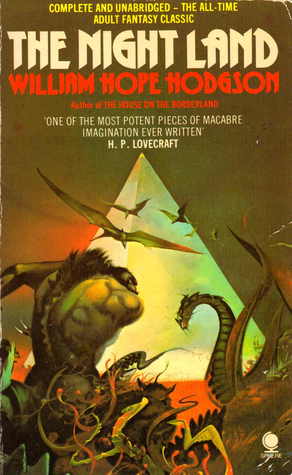
The Night Land By William Hope Hodgson

The Night Land


The book begins in the 17th century. The narrator recounts his wooing of his love, the Lady Mirdath and her death after she gives birth to a child. He experiences a vision of the far future when their future incarnations will meet again.

His future self lives in the Last Redoubt, a gigantic pyramidal structure which houses the last remnants of humanity on an Earth plunged into eternal night. The Last Redoubt is encircled by monstrous horrors waiting through millennia for its power source (the Earth Current) to fail. These nightmarish creatures and forces map out the surrounding landscape with names that really capture their power and horror: the House of Silence, the Road Where The Silent Ones Walk, the Watching Thing of the South-East, the Valley of the Hounds are so on. I had not really expected the geography to be so busy or so poetic.

The hero makes mental contact with a woman from a lesser redoubt, a reincarnation of Mirdath. When the earth current protecting her people fails, he dons armor like a knight of old, and sets out to find her.

Sounds pretty compelling, doesn’t it? Unfortunately, the book itself is much less so.

Firstly, there is the language barrier. Because the book is written from the perspective of a 17th century gentleman, Hodgson employs a lot of archaic terms and spelling which might put people off. Having said that, I got used to these stock words pretty early on and they were worn into my memory by repeated use.

Everything is repeated repeatedly. The most egregious example is the focus on food and sleeping. Let’s take a few examples of the former for a moment.

I did ope my scrip, and take thereform three tablets, the which I chewed and did eat.

And I sat me down in a little clear place among the bushes, and did eat three of the tablets.

And I eat my three tablets, and drank the water that I did get from the powder.

I eat two tablets, the while my belly did cry out for an wholesome and proper filling

I should now eat four of the tablets

I eat two of the tablets and drank some of the water

And here I eat four of the tablets; for truly so many were my due

I had eat three of the tablets, and drunk some of the water.

And it goes on and on, a dreary, lulling beat between digressions and places where nothing happened, other places where something almost happened. and the occasional place where something actually did. It became so numbing that when some crisis occurred it took a surprising length of time for its import to seep through my oppressing ennui and my emotions to properly engage with the narrative once again.

This improves somewhat once he finds his beloved. There are some frenetic scenes and powerful images. However, they are islands on a sea of gloppy sentimentality out of place with the supposed omnipresent danger the hero and his companion face. It’s as if the lights go on for  vast sections of the book, the birds begin to sing, and flowers blossom.

Worse, this syrup is tainted with poison. In the midst of all the repetitious talk of love and devotion and the daintiness of the girl’s feet, the main character considers whipping his ‘Baby-Slave’ for an act of ‘naughtiness’, considers it again and again, before finally acting on his impulse. The first mention of whipping her killed any sympathy I had for him, and the later incidents confirmed my initial reaction.

The Night Land is often described as a flawed masterwork. In some ways, the deliberately aged language inadvertently works to excuse its glaring faults. It fools the reader into placing it into the 17th century instead of the year it was published (1912). War of the Worlds was already over a decade old for example.

I think it would be more accurate to say that this work contains elements of imaginary brilliance combined with baser and more toxic substances to form an ore that glitters at a distance but is dull up close. It is up to you to decide for yourself if it is worth the effort to extract the value from it.
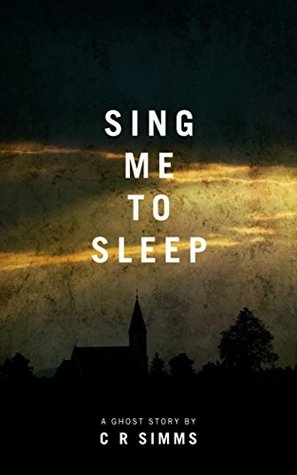
Sing Me To Sleep By Chris Simms

singmetosleep


Okay, first of all, the title of this ghost story is a bit misleading since the main character, Laura, is having sleepless nights due to mysterious bird song in the old house she and her husband Owen recently bought. Perhaps, it refers to something that happens near the end of the book. Don’t worry. I won’t give any spoilers.

Laura is a retired ballet dancer and her husband, Owen, is a conductor. They are both really well drawn characters, but Laura is the focus of the reader’s sympathy.  Her story is so immersive that a couple of times, I actually thought the story moved from first person to third person, when in fact it had been third person the whole time.

I really enjoyed the writing. Some of the images are very poetic and really add to the atmosphere. After a careful, incremental build-up, the tension ratchets as Laura’s sanity is questioned and the terrible history of the house is revealed. This isn’t a book for readers looking for lots of gore, but it has plenty of surprises. The psychological depth of the main characters is key to its success for me. This anchors the weird to reality and gives the reader a reason to care.

Kindle Countdown Deal

I’m running two promotions at the moment. I’ll list them in order of time sensitivity.


ThePartingGift-Cover

Firstly, the short story The Parting Gift is free on Amazon until 24th June.


I am also running a Kindle Countdown (99 cent) deal until 28th June for A Bright Power Rising & The Unconquered Sun on the UK and US Amazon stores.

A Bright Power Rising US Link // UK Link.

The Unconquered Sun US Link // UK Link.


Violence: A Writer’s Guide

9866142


This is an introduction to the world of violence for Writers. It’s not a book on writing technique. It’s really about the mechanics and psychology of violence. The writer has twenty years experience as a correctional professional and worked in Iraq as an adviser. Combined with thirty years of martial arts training, this gives him an insight into the nature of violence which any writer dealing with the subject would find priceless.

I can’t say I enjoyed the book, but I found it eye opening and fascinating. It’s definitely a book I could see myself rereading. Writers, I’m sure, will pick out of it what they want, or rather what their readership will let them. The writer of the foreword said that he didn’t agree with everything that Miller wrote, and I could see others agreeing with that sentiment especially with regard to some of the macro-historical points. However, you can’t disagree with Miller’s experience and knowledge of the subject.

The information is presented in a concise, matter-of-fact fashion. There are links to real word examples of violence which I skipped. I simply have no interest in watching other people’s suffering to further my knowledge. I know some writers like morgues and dead bodies but I’m not one of them.