Free SciFi & Fantasy Giveaway is available until 15 April. You can find it HERE.
More Free SciFi & Fantasy Giveaway for March & April
Leave a reply
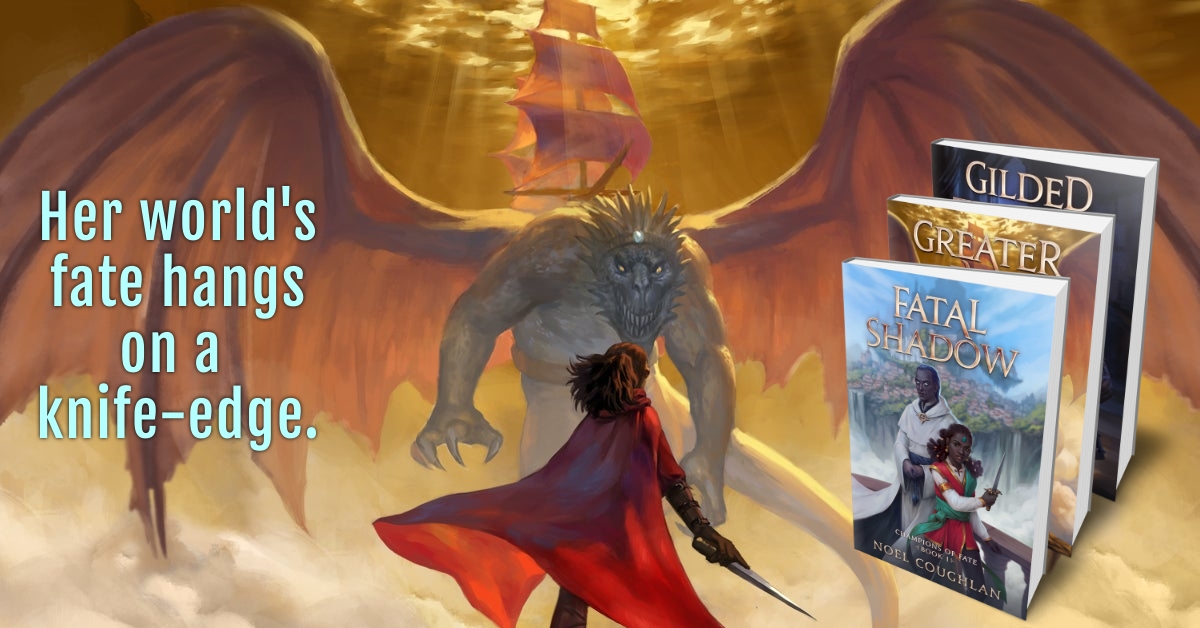
Free SciFi & Fantasy Giveaway is available until 15 April. You can find it HERE.
Still working on Fatal Invasion. It’s amazing looking back at how long I have lived with this story. No Escape, the short story that started the series, was published in 2017. Work on Fatal Shadow started later that year, so I have been working on the series for eight years. Back then, it was called The Knotted Man. Glad I changed it. Often my first draft titles change. The first draft of the Golden Rule Duology (A Bright Power Rising/The Unconquered Sun) was rather apt but very cumbersome The Two-Thumbed Hand. Fatal Shadow‘s sequel changed from Lesser Evil to Greater Evil, because I came to realise the latter had much better. Gilded Treason was Gilded Cage for a long time, but the original title, I felt at least, was a little too generic. It almost became Gilded Snare at one point. I try to pick titles that don’t bring up too many books by the same name. Obviously, if Stephen King or Brandon Sanderson picks one of my titles for their work, there’s nothing I do except chalk it up to bad luck.
Name changes can also happen to short stories. No Escape was originally called Prey. Hoard was called The Hoarder, but I changed it to move the focus on the main character rather than the villain. One Moonlit Night was called How to save the Earth? for a long time which was not really what the story is about. On the flip side, many of the other short stories had their names fixed from the first draft: The Fate Healer, Murder Seat, the Alienity stories and so on. I suppose it’s just easier to get to the heart of what a short story is about.
(Warning: This a horror story.)

She slew all three before he woke.
Still clutching the wet knife, she stood at the passage tomb’s silent heart, barely able to breathe in expectation of his waking as the grave’s own dead-cold breath sank through bloodstained clothes into her shivering flesh.
She yelped and almost dropped the knife as he threw off the stone slab before her like a blanket and inhaled the air still moist with staling blood. He rose, a man as tall and straight as the spear he carried, a mighty giant from a dim, misremembered past. The monks’ scribblings had not prepared her for the Formorian. His kind were the first inhabitants of this land, or rather the first to survive, almost gods who long ago returned to the sea and earth that birthed them. The scribes had written of them as either beautiful or monstrously ugly, but in truth, the one-eyed man perfectly embodied both states at once.
He spoke to her in a language she didn’t recognize. On and on, he intoned, a torrent of words she couldn’t comprehend that flooded the chamber with their mocking echoes.
Silence fell. Her lips trembled with the urge to speak, but wonder and awe had robbed her voice.
His hand reached so gracefully toward her the first she knew of it was its touch as soft as a dying breath against her lips. She flinched from it, but he had already drawn something out of her, a thread of her soul, perhaps.
“Why have you have woken me before the Winter has passed?” he asked in the language she spoke, her language.
“But it is mid-summer,” she said, pointing to the bright mouth of the shaft behind her. A shroud of gore covered the little bodies on the floor. Bloodstains on the spiral-covered walls mapped out the death-throes carved by her knife. She was so drenched in blood she might have been one of them herself. She had carried out the rite exactly as proscribed, to the last pitiless detail.
“Winter isn’t a time of year,” he said with the patience of someone explaining to an infant. “It isn’t the cold. It’s death, and death is due to stalk this land for many more centuries.”
“But we need you now!” she pleaded, suddenly aware she was alone with him in the chamber. Nobody else had dared to do what had to be done. “Invaders have come and bring our doom.” It was some of their fruit who lay dead and broken on the floor.
With a weary sigh, the giant drove his spear through her chest. He struck with such force and delicacy she didn’t feel her skewering, even as her lifeblood gushed from the wound.
“To me, you’re all invaders,” he said.
It was only then that she screamed, the passage’s echo taking up her last cry so that she screamed threefold.
© Noel Coughlan
Thanks to everyone who supported the preorder! It was great to see that so many readers are excited as me to continue the adventure.
Just a quick note that Tuesday 8th October is the last day to buy the ebooks of Greater Evil and Gilded Treason at 99c for now.

The third book of Champions of Fate is almost here! The book will be offically released on 6th October. In the meantime, you can preorder it HERE.
The city state of Gyre once lauded Drinith as a hero. Now, she has become its most notorious fugitive.
Two of Gyre’s most powerful oligarchs are murdered the same night, plunging the city into turmoil. Suspicion falls on Drinith. Her home is raided, her friends are arrested, and former allies turn against her.
Betrayal haunts her every step through unforgiving streets and alleyways. Everyone from the most chivalrous courtesar to the lowest hired sword hunts her. Can she keep ahead of them until she unravels the city’s darkest secret and reveals the identity of the killer?
Ten years ago, on the 6th April 2014, I first hit the publish button. for the first time. I had poured my soul into A Bright Power Rising I was about to publish for the guts of twenty years before that. Every step in the publishing process had been painful, delayed and victim to error. Already I had discovered that the original cover that had a glaring typo everyone had missed and had it amended. I always envy those new authors who unbox their first copies of their first book in floods of tears. I didn’t cry, but if I had, it wouldn’t have been from joy. In truth, I was anxious.
I am now on the cusp of publishing my fifth novel and that worry is now in the past. Here are ten lessons I learned from ten years of self-publishing.
(1) Fear is your greatest enemy, but sometimes that nagging doubt in the back of your head is your best friend.
(2) Learn from your mistakes so you can leave space for new ones to keep things interesting.
(3) Be grateful to those readers who love your work. Not everyone will like it and that is absolutely fine and normal.
(4) Don’t comment on reviews. That has always been my policy from day one and I have seen nothing in ten years that has made me change my opinion.
(5) The demon of typos, Titivilus, always wins in the end, but do your best to conceal his victory. The industry standard is one error per page. Aim at zero errors but don’t expect to achieve it.
(6) Even things that can’t go wrong occasionally will, but sometimes good things just arrive out of the blue with little or no effort on your part. In short, luck plays a massive part. All you can do is to maximise the possibility of it finding you.
(7) It is important to be patient but don’t confuse patience with passivity. Keep moving.
(8) Every book and story poses its own particular challenges. Overcoming these obstacles is just a natural part of the writing process.
(9) Equally, sometimes it is better to recognise a story doesn’t work and walk away. The central concept may be flawed or you don’t emotionally connect with the story. Again, this is a natural part of the writing process.
(10) Don’t forget to enjoy writing and publishing. Celebrate the successes.
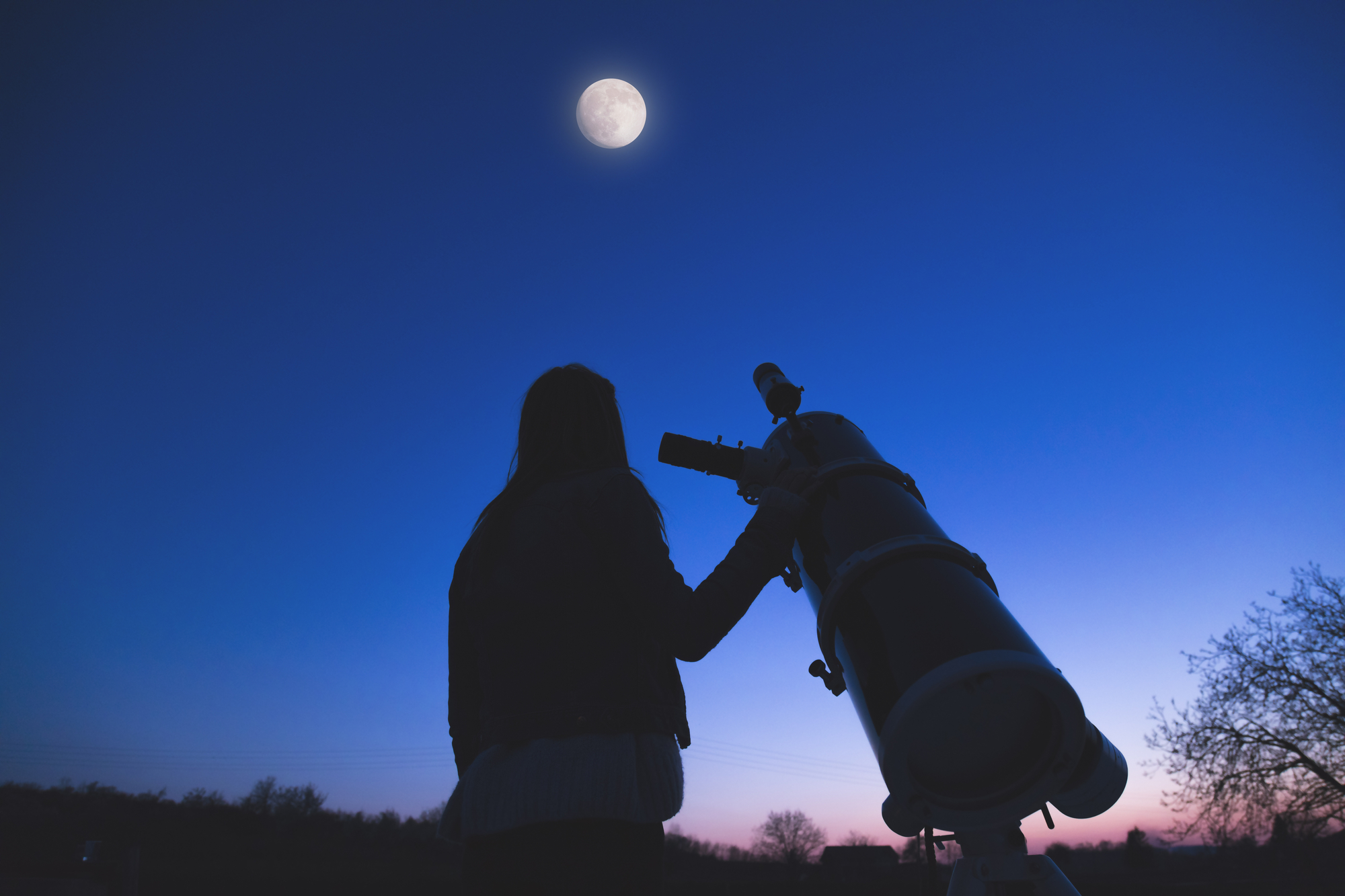
Jen yawned as she stood in the back garden in the dark, while her father tinkered with his telescope. Astronomy was Dad’s obsession. Most clear nights, he was out here staring into his little, fat telescope, ignoring his family, but, now and then, guilt made him try to drag Jen outside in a feeble effort to interest her in his hobby.
When the weather didn’t save her, she dissuaded him with a range of excuses. She was tired. She had homework or housework to do. She had a cold. She had a headache. She just didn’t feel like it this particular night, but maybe next time… With any luck, it would be overcast. He never seemed too bothered when she declined. Sometimes, he looked relieved. But, on a rare occasion, looking back into those eyes aglow with boyish enthusiasm, she just couldn’t bring herself to refuse.
Of course, being out here with Dad was like being away from him in the house—only colder and with less to do. She stood watching his head disappear behind his back as he bent down and stared into the eyepiece, mumbling to himself, scribbling down figures in his notebook. Jen shivered. She learned her lesson the last time she admitted her boredom.
“I’ll tell you what. I’ll call it out and you jot it down,” he’d said, thrusting a notebook and pen at her. She’d tried her best, but he was so damn picky.
“No, no, no. The other column.”
“Orion doesn’t have a y, honey.”
“Is that a three or a five?”
“Do try to be neat.”
“Wrong column!”
“That’s not how you spell Betelgeuse.”
It had ended with her screaming as she fled into the house. Her cheeks warmed with embarrassment. At least some part of her was warm.
“Come look at this,” Dad said. He stood away from the telescope and pointed at the sky. “It’s that star there.”
Which one was it? It didn’t matter. “Oh, right.” Jen sighed quietly as she looked into the eyepiece. It looked like a star, only slightly bigger. It wasn’t even a binary.
“Lovely,” she said, stepping away.
Dad looked troubled. He obviously saw through her fake smile.
“How about we look at the Moon for a while,” he said. “You always like the moon.”
“Great!” Now, the Moon was interesting. It wasn’t just some blurry spot of light. It was another world, with craters and mountains and valleys and basalt seas. Another world on Earth’s doorstep.
Dad swung the telescope toward the moon, fiddled with the adjustment knobs, peered into the eyepiece, fiddled with the knobs again. He put both thumbs up. “We’re ready.”
“Dan, Jenny, come quick!” Mum roared from the back door.
Just when things were getting interesting.
“What’s wrong?” Dad yelled, his head swivelling toward the house.
“You wouldn’t believe me. On the television. Come quick. Both of you now. Please.”
Dad shook his head. “We had better go in.” He stomped toward the house.
Jen sighed and followed.
“Quick! Quick!” Mum cried hysterically.
Dad broke into a run. Jen jogged after him.
“What’s happened?” Dad panted as he bent over and leaned one arm against the frame of the back door.
“Into the living room! Quick!” Mum cried, disappearing into the hall. Dad followed her. Jen hesitated. This was completely out of character for Mum, and a bit frightening.
“Jen!” Dad called. “Where are you?”
She hurried down the hall and into the sitting room. Her parents were standing in front of the television. Dad had a perplexed frown.
“Are you sure that this isn’t some sort of film or an ad maybe?” he asked.
“It’s on the news channels,” Mum said. “I’ve checked them all.”
Jen pushed between them. Was that a man or woman on the screen? He (if he was male) had blue eyes, black skin, Asian eye-folds and frizzy red hair. Dad kept flicking the channels, but only the banners and tickers and logos changed. The odd-looking person was on every channel.
Who was he? What did this all mean?
Dad gave up on changing channels. Black words scrolled across a yellow background on the bottom of the screen. ALIEN SIGNAL FROM MOON. FIRST IMAGE OF NON-TERRESTRIAL LIFE FORM. NO INDICATION OF PURPOSE AS YET. Above it, in blazing white letters on a red strip, was the word EXCLUSIVE.
“There are indications that what we are seeing is not a static picture,” the newscaster squeaked excitedly. “However, the alien has yet to speak.”
The alien’s lips moved. “Hello, people of Earth.” The voice sounded human and friendly, even jovial, though it could have been male or female. “We are the Gyonmir Communion.” His faced lurched into a hideously stretched smile. “We don’t actually look like this. This construct was chosen to put you at ease. We are a Type II civilization on your Kardashev scale. As such, we feel it is our duty to help less developed worlds.”
“Wow,” Dad said. “They’re going to help us expand beyond this solar system. Who knows what technologies they might give us?”
The alien’s smile disappeared. “Earth is a beautiful world and yet so sick. It is riddled with a peculiar cancer—you. You are consuming your planet’s resources at an astounding rate, apparently oblivious to their ultimate finiteness. If your species does not expand beyond its home planet, you are ultimately doomed. And yet to allow such expansion might would turn a localised disease into a contagion.”
Dad clamped his hands to the sides of his face. “They’re going to kill us all.”
An electric shiver passed through Jen.
“Dan!” snapped Mum, flicking her head in Jen’s direction.
Dad glanced guiltily at Jen. “Oh, right. Sorry. Don’t mind me. Everything will be fine. I promise. I’m just…I can’t believe this is happening.”
Mum’s arm slipped around her. “Don’t mind your father. He’s always talking nonsense.” Jen attempted a smile. It did not feel particularly convincing.
The alien was still talking. “We put our best minds on the problem. No other sentient race displays your fecklessness. The flaw in your nature had to be down to some evolutionary quirk, but for a hundred years we have struggled to find it. And then, one day, we realised the answer had been staring us in the face all the time—the Moon.”
The alien honked in some poor attempt at laughter. “That’s right—the Moon. No other life-sustaining planet has such a monstrously large satellite. The moon stabilises your planet’s tilt to an extraordinary degree. It keeps your climate relatively constant.”
He leaned in to the camera. “Other races evolved in more changeable environments. To survive, they had to learn to plan ahead with volatile seasons and prolonged extreme weather events. You, on the other hand, had relatively docile climates. You had only to plan for the expected in a given year. When the expected didn’t happen, many of you died and a few civilisations collapsed, but it was not enough for you to learn your lesson. Other sentient races had to be ready for the unexpected at any time to build a civilization in the first place. Evolution was too easy on you, and it shows.”
He shook his head sadly. “So many things about the Moon’s motion encourage mechanistic thinking. Even its size and position means that it fits almost perfectly over the sun during a full eclipse.”
His smile stretched wider. “So we have decided on a drastic solution. We are taking away your moon. Its departure will likely collapse your current global civilization, but at some time in the distant future, either your descendants or another sentient species will again reach for the stars, cured of your insanity, your lunacy, if you will.” He honked again. “Goodbye and good luck.”
The picture went blank except for the banners and channel logo. After a long pause, the news reader appeared. He looked so pale as he filled the silence with random fragments of sentences.
Dad seized Jen’s hand. He started pulling her and Mum toward the door.
“Come outside with me. Now.”
What horrors might they see? “I don’t want to go!” Jen tried to tug her hand free, but Dad’s grip was too strong.
“Don’t be frightened, Jen. Your father knows what he is doing.” Mum’s soothing tone was reassuring, but the questioning glance she directed at him was not.
Jen shook her head, using her free hand to pull her other one free. “I’m not going out there.”
“But Jen…honey, this might be your last chance to see the Moon,” Dad pleaded. He stretched out an open hand. “Every moment we delay here, the Moon may be slipping away. Don’t worry. You’ll be with us. Trust us.”
Reluctantly, she laid her hand on his palm. His fingers gently closed around it and both hands slipped into a loose clasp.
“Good girl. No need to be afraid,” he said as he led them out of the room and down the hall.
“Do you really think that they can just take the Moon like that?” Mum asked as they passed through the kitchen.
They had left the back door open in their hurry. Flies and moths covered the ceiling. How would moths steer without the Moon?
“We’ll soon know,” Dad said. They plunged into the night.
The Moon was still in the sky, full and round and reassuring. Perhaps, the transmission was some sort of prank after all. The Moon was huge. The idea of an alien force being powerful enough to just take it away was ludicrous. And yet Jen was afraid to take her eyes off it in case it disappeared.
“I keep expecting some giant hand to reach out of the sky and grab it,” Dad said.
Mum mumbled something.
“Sorry,” Dad said. “Everything will be fine.”
The Moon was getting smaller. Or was Jen imagining it?
Mum gasped. “Oh, my Lord. The Moon is shrinking.”
Dad hugged Jen to him. “Don’t worry. We’ll be fine.”
But Jen couldn’t speak. She couldn’t look away from the retreating moon.
The telescope! She ran to it and peered in the eyepiece. The surface of the Moon looked as it always had. No telltale glimmers gave away the aliens’ activity. But the Moon was definitely getting smaller.
Big hands pressed lightly on her shoulders. “What do you see?” Dad asked.
Her mumbled reply meant nothing to her. She was too busy to speak. She had to sear every pock and pimple on that surface into her memory before it slipped away. It was so beautiful. To think they would lose it forever. Dad would miss it the most. He had spent so many nights staring at it.
She moved away from the telescope. “Dad, you look.”
Dad refused with a wave.
“You might spot something, some clue I wouldn’t notice.”
Taking a deep breath, he bent over the eyepiece. “Hmm.” It was merely an absent-minded murmur.
Jen glanced back and forth between the dwindling satellite and her father. She had done the right thing, the kind thing, the daughterly thing. That nagging pang of regret was best ignored.
Dad shook his head as he straightened his back. “I can’t see anything unusual. Except that it’s getting smaller. Helen, do you want a look?”
“I’m fine,” Mum said. “Let Jen look.”
“Yes. Jenny, you can look now. I’ve had my whole life to look at it.” His voice thickened to a rasp.
Jen peered into the eyepiece. Even through the telescope, the moon was small. The detail on its surface melted into a blur and it became a small white disc.
“Can you still see anything?” Dad asked.
“Can you still see anything?” Dad asked.
“Just about,” Jen said. The Moon was a tiny point of white now, no different from a star.
It dimmed. “You take a look.” She stepped out of her father’s way.
He looked in the eyepiece, then shook his head. “It’s gone. The Moon is gone.”
© Noel Coughlan
I’m seventeen chapters into Gilded Treason, having finished an outline of 951 years of Gyran History of Gyre. Drinith and her companions arrive in Gyre in 948, the events of Greater Evil occur in 949 and Gilded Treason takes place in 950. (The apparent discrepancy a keen reader might notice is due to the Gyran calendar having a zeroth year.)
I’m busy ignoring all the hype about AI and chatbots. Its visual equivalents looked impressive to me at first, but their images come across as cut from the same cloth, almost if they are done by one artist with the same strengths and weaknesses (which, I suppose, they are). I’m sure at some stage AI-written books will become best sellers and win awards. I’m certain more commercially minded authors are experimenting with it already to relieve some of the dreary business of writing. Already some short story magazines have had to stop accepting unsolicited manuscripts due to the amount of AI spam pouring into their submissions systems. And I guarantee within six months to a year, I won’t be able to watch anything on Youtube without being besieged by ads about how I can make millions writing with AI. Can AI ultimately fake human experience on the page? For many readers (and I include myself among them), possibly. There are a lot of books out there and a lot of keen observations of human life, a lot of fine prose. I read old science fiction and down through the years more modern stuff I thought to be new and fresh and revelatory turned out to have been done in some fashion already fifty or sixty years ago. Simply put, original writing is subjective. It only has to be original to the reader. I could easily read something by an AI and think it thoroughly original simply because I haven’t come across it before. There’s not some supreme observer keeping score on what is new and what has been done before.
Of course, there is a way to do this in a fair and objective fashion. If we programmed an AI…
[P.S. I didn’t use a chatbot to write this. I’m a 100% organic writer. :)]
Raina Nightingale interviewed me about Fatal Shadow and other stuff. You can check it out here.
In Gyre, true power rests in the Parliament of Merit, the Ducalion of Gyre being merely an impotent figurehead. However, despite the pretence of all meritocrats being equal, matters related to the seccurity of the state in the broadest sense are delegated to a select group of the most influential and popular among them. This shadowy commitee is known as the Vicenary Jury. It is also nicknamed (somewhat degoratorily) as the Iron Circle.
This group originally consisted of the Ducal Steward, a single cordent general, the Grand Parsimon (the state’s finance minister), the Justiciar General (chief judge), the Dragon Keeper, and fifteen jurists. However, as Gyre grew and its interests spread to Noster and beyond, the number of officials increased, squeezing the number of jurists until only five remained.
The jurists are elected by secret ballot during Crevastival for a term of one year. Every meritocrat is a potential candidate. The result is never formally declared, but any meritocrat worth the title makes it their business to know the identities of the winners.
At the time that Drinith first arrives in Gyre, the Vicenary Jury consists of:
As a rule, its proceedings are secret. No minutes are recorded, no written annals kept. Its orders percolate through the Meritocracy in whispers. Its meetings, held in strictest privacy, are conducted in a chamber deep under the parliament building. No outsider is allowed to enter. According to rumor, the members themselves take turns to clean it. Few outside the Meritocracy are even aware of its existence, but it is an indelible menacing presence in meritocrats’ lives. Even its members fear it.
 Noel Coughlan's Blog